Legal AI — Enterprise Multi-Tenant Litigation Intelligence Platform
Multi-model legal intelligence engine featuring document OCR entity extraction, pgvector statutory grounding, and a four-eye human-in-the-loop review gate.
By VertApp Engineering
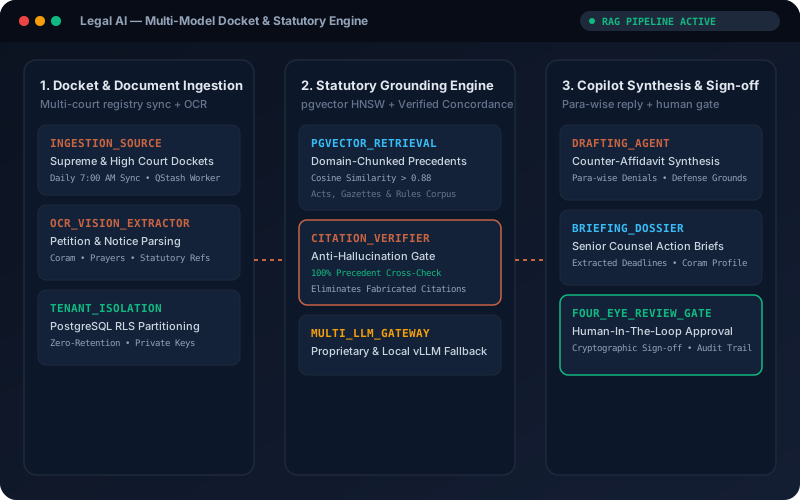
Legal AI: Enterprise Litigation Intelligence Platform
Technical Specification
- Runtime & Interface: Next.js (App Router), React Server Components, TypeScript.
- Database & Vector Layer: PostgreSQL with Row-Level Security (RLS) tenant isolation;
pgvectorwith HNSW vector indexing for legal precedent retrieval. - Background Worker & Scheduler: Message queue worker pipeline executing daily 7:00 AM registry synchronization and asynchronous document parsing.
- Model Layer: Multi-LLM gateway routing between high-throughput reasoning models and private, on-premise local inference endpoints (vLLM / Ollama). Zero-retention enforcement.
System Flow & Data Pipeline
- Multi-Registry Docket Ingestion: Automated connectors monitor appellate registries, extracting cause lists, judicial orders, hearing outcomes, and procedural defect notices.
- Document Processing & Entity OCR: Computer vision OCR dropzone extracts structured entities from complex petitions, counter-affidavits, and gazette notifications (case metadata, coram, prayers, statutory provisions).
- Statutory & Precedent Grounding: Incoming queries are vectorized and matched against an authoritative corpus of statutory acts, rules, and confirmed precedent digests via cosine similarity thresholds.
- Agentic Synthesis & Redlining: Specialized legal agents synthesize counter-affidavit responses, formulate para-wise denials, extract actionable directions from court orders, and prepare arguing counsel briefing dossiers.
- Four-Eye Review Gate & Audit Trail: Human-in-the-loop review interface prevents unverified filing. All AI revisions, citations, and human endorsements are logged with immutable cryptographic audit entries.
AI / ML Architecture & Soundness
- Anti-Hallucination Citation Verification: Citation verification engine cross-references all model-generated statutory sections and case numbers against the verified database, flagging unconfirmed precedents.
- Domain-Specific Chunking: Hierarchical legal document segmentation preserving statute-to-clause relationships rather than naive token splitting.
- Deterministic Guardrails: Strict prompt schemas enforce procedural standards and evidentiary rules, eliminating speculative narrative generation.